Common problems with wedding flowers in Longford and fixes
Posted on 19/10/2026
Wedding flowers should feel like the easy part. You pick the colours, imagine the bouquet in your hands, and picture the tables glowing later in the day. Then reality arrives: petals wilt, stems droop, delivery timings slip, or the bridal bouquet looks lovely but completely unlike the reference photo. That is exactly why Common problems with wedding flowers in Longford and fixes is worth understanding before the big day.
Longford weddings have their own rhythm. Venue timings can be tight, travel routes matter, and weather can change faster than anyone would like. Whether you are planning an intimate ceremony or a full reception with buttonholes, bridesmaid bouquets, centrepieces, and a statement bridal arrangement, the right flowers can lift the whole day. The wrong choices, though? They create avoidable stress. Let's sort that out properly.
This guide walks through the most common wedding flower problems couples face in Longford, why they happen, how to fix them, and how to avoid the same headaches in the first place. A few small decisions now can save a lot of "oh no" later. Honestly, that is the difference between calm and chaos.
Table of contents
- Why this matters
- How wedding flowers planning works
- Key benefits and practical advantages
- Who this is for and when it makes sense
- Step-by-step guidance
- Expert tips for better results
- Common mistakes to avoid
- Tools, resources and recommendations
- Law, compliance, standards, or best practice
- Options, methods, or comparison table
- Case study or real-world example
- Practical checklist
- Conclusion
- Frequently asked questions
Why Common problems with wedding flowers in Longford and fixes Matters
Wedding flowers do more than look pretty. They shape the tone of the ceremony, tie the colours together, frame the photos, and often appear in the background of the moments people remember most. A bouquet that fades early or a table arrangement that arrives incomplete can throw off the entire feel of the day. That sounds dramatic, but if you have ever seen a boutonniere fall apart just before the vows, you know it is not an exaggeration.
In Longford, the practical side matters too. Travel time between the florist, home, venue, and ceremony location can affect freshness. Seasonal temperature shifts, indoor heating, and even a stuffy wedding car can change how flowers hold up. So yes, style matters. But logistics matter just as much.
Getting ahead of common problems also helps your budget. Replacing damaged flowers at the last minute is rarely cheap, and time pressure tends to push decisions in the wrong direction. When couples understand the risks early, they can choose hardier blooms, sensible quantities, and arrangements that actually suit the day.
Key takeaway: the best wedding flower plan is not just beautiful; it is built to survive the real conditions of the day. That means heat, transport, timing, handling, and the inevitable little surprise. There is always one, isn't there?
How Common problems with wedding flowers in Longford and fixes Works
Most flower issues fall into a few familiar categories: freshness, timing, weather, styling, transport, and communication. Once you know which category the problem sits in, the fix becomes much easier.
Here is the basic flow:
- You choose the style and flower types. This sets the visual direction and affects durability.
- The florist prepares stems and designs the arrangements. Conditioning, cutting, and hydration start here.
- Flowers are delivered or collected. This is where timing and transport become crucial.
- Arrangements are stored or carried correctly. Temperature and handling can make or break them.
- They are used across the ceremony and reception. Buttonholes, bouquets, table arrangements, and venue pieces all have different needs.
If anything goes wrong, the fix depends on the stage. A bouquet that is too hot needs a different solution from one that was made too early. A centrepiece that looks sparse may simply need extra foliage, while a wilted bouquet might need a full refresh. The point is to troubleshoot instead of panic.
To be fair, most wedding flower problems are not mysterious. They are practical. A loose ribbon, a rushed delivery slot, a soft bloom used in warm weather, or a bouquet left in a car boot on a mild afternoon. Small things, big effect.
In a place like Longford, where couples often want something elegant but not fussy, the smartest approach is to design for the day as it will actually happen, not as it appears in the mood board.
Key Benefits and Practical Advantages
Working through the common flower problems before the wedding gives you a proper advantage. It is not only about avoiding disaster; it is also about getting more value from what you spend.
- Less stress on the day: You are not chasing replacements or trying to rescue a bouquet minutes before the ceremony.
- Better photo results: Fresh, balanced flowers hold shape better in close-up shots and group pictures.
- Smarter budget use: You can put money into the flowers that matter most, rather than emergency fixes.
- Improved longevity: With the right care, bouquets and arrangements stay presentable longer.
- Cleaner styling: A consistent plan makes bouquets, table flowers, and buttonholes feel like one design rather than separate bits.
- More confidence in your supplier choice: You will quickly see whether a florist understands wedding logistics or just sells pretty arrangements.
One practical benefit people overlook is flexibility. If you know what could go wrong, you can build in backups. For example, a bridal bouquet can be slightly smaller and more durable if the ceremony is outdoors, while reception table flowers can be fuller because they face less handling.
And yes, this helps with decision-making too. You do not have to know every flower name under the sun. You just need to know which blooms behave well, which arrangements travel well, and which details are worth asking about.
Who This Is For and When It Makes Sense
This guide is for anyone planning a wedding in Longford who wants the flowers to look good and stay that way. That includes brides, grooms, planners, family members helping with arrangements, and even couples who think they are "not really into flowers" until they see the room dressed properly. Then, suddenly, they are very into flowers.
It makes particular sense if:
- your wedding is during warmer months and you are worried about wilting
- your venue involves travel between locations
- you are ordering multiple items, such as bridal bouquets, bridesmaid bouquets, buttonholes, and table arrangements
- you want a specific colour palette and need it to hold together across the day
- you are balancing style with budget and want to avoid waste
- you have not ordered wedding flowers before and want a calm, sensible process
It is also useful if you are comparing options. For example, a couple deciding between a simple bouquet-led setup and a fuller floral package may discover they need fewer statement pieces than they first thought. That is the sort of thing that saves money without making the day feel plain.
If you are still in early planning mode, it can help to browse a florist's wedding-specific range first, such as wedding collections, and then narrow down the pieces that are most important for your venue and timeline.
Step-by-Step Guidance
Here is a practical way to handle wedding flowers in Longford so the common problems stay small, not catastrophic.
1. Start with the day, not just the flowers
Before you pick a rose or peony, map out your schedule. What time is the ceremony? How far is the reception? Are you getting ready on-site or elsewhere? Flowers that need lots of handling are a poor match for a fast-moving schedule.
2. Choose blooms that suit the season and setting
Soft flowers can be beautiful, but they are not always the best choice for a warm room or long transport. A florist can suggest sturdier options and combinations that still feel elegant. For example, mixed arrangements with structured flowers and supportive greenery often hold better than all-soft blooms.
3. Confirm the exact items you need
This sounds obvious, yet it is where mistakes happen. Bridal bouquet, bridesmaid bouquets, buttonholes, corsages, table arrangements, ceremony flowers, extras for the cake table, maybe a couple of spare stems for repairs. Write it down. Wedding days do not reward vague planning.
4. Ask about delivery and setup timing
Flowers should arrive close enough to the event to stay fresh, but with enough lead time for setup. If your venue has a strict access window, make sure the florist knows. A bouquet arriving late is more than an inconvenience; it can throw the whole morning.
5. Review the brief with photographs and plain language
Do not rely on "something romantic but not too much." That can mean ten different things. Use references for shape, colour, and feel. Then describe what you actually want in simple terms. Soft, airy, compact, dramatic, loose, modern, classic. Much better.
6. Agree on substitutions in advance
Sometimes a specific bloom is unavailable or not at its best. A sensible florist will suggest alternatives. Ask how similar the substitute will look, whether the colour tone changes, and whether the overall design will still work.
7. Plan storage and handling
Once flowers arrive, keep them in a cool spot away from direct sunlight, radiators, and busy foot traffic. A bridesmaid trying to help with the bouquet while also holding her clutch, phone, and lipstick? That is a scene. Best avoided.
8. Build in a small backup plan
A spare buttonhole, a few extra stems, florist tape, scissors, and water can solve little issues fast. The backup is usually tiny. The peace of mind is not.
Expert Tips for Better Results
Let's face it: wedding flower advice gets vague online. "Choose seasonal flowers" is fine, but it is not enough. Here are the practical details that matter in real life.
- Keep the bouquet proportionate to the person carrying it. A large bouquet can look incredible in photos but be awkward to hold for hours.
- Use hardy flowers for wearable pieces. Buttonholes and corsages face heat, touch, and movement, so they need tougher stems and neat securing.
- Think about colour under venue lighting. White flowers can read cream or blue in certain lights, especially later in the evening.
- Ask for a water source during transport if needed. Even a short journey can matter when the weather is warm.
- Separate display flowers from hand-held flowers. What works on a ceremony table is not always right for a bouquet.
- Use foliage strategically. It can help create fullness without making the arrangement overly delicate or expensive.
One small but useful habit is to ask what happens if the flowers open more than expected before the event. Some blooms arrive tighter and then expand beautifully; others can look a little tired if they are over-opened. That timing difference matters more than most people think.
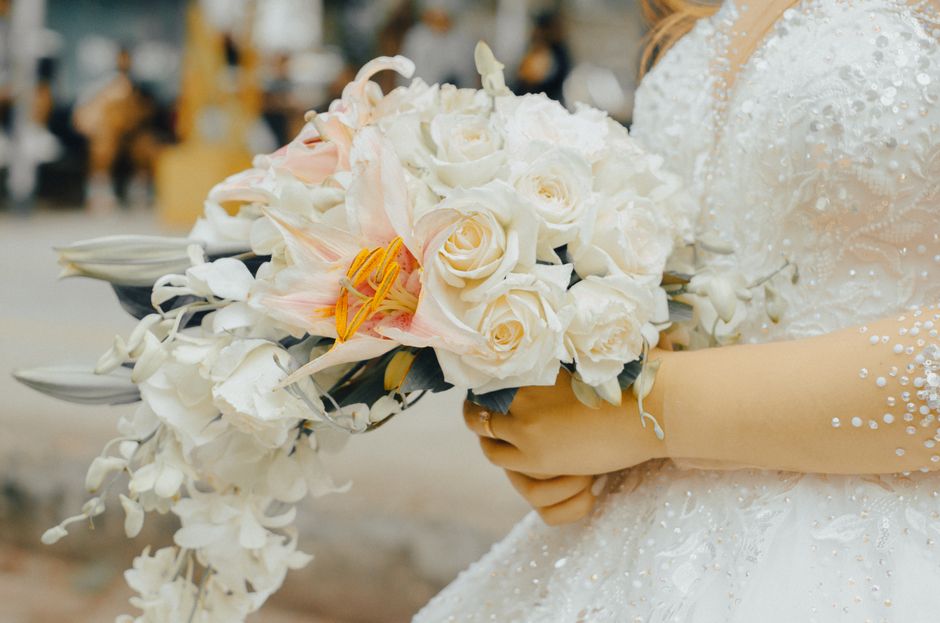
If you are comparing bouquet styles, browsing a dedicated option like bridal bouquet designs can help you see the difference between compact, cascading, and softer hand-tied looks before you commit.
Also, do not overpack the day with floral jobs. More is not always better. In some weddings, a strong bridal bouquet, neat buttonholes, and a few well-placed tables arrangements do more than a room full of random stems. Simple can be powerful. Quietly powerful, even.
Common Mistakes to Avoid
These are the problems we see most often, and they are all fixable if you catch them early.
Choosing flowers for appearance only
A flower may look stunning in a photo but be too delicate for a long day. If the ceremony, drinks reception, and dinner stretch over several hours, durability matters.
Leaving the order too late
Wedding flowers are not the same as a last-minute bouquet for a birthday. The design conversation needs time, especially if you want bespoke colours or a specific shape.
Not sharing the venue conditions
Indoor heat, outdoor wind, narrow access, or a long walk from car to venue can all affect the design. If the florist does not know, they cannot plan for it.
Forgetting about transport
Flowers can be damaged by rolling around in the back of a car, being held too low, or sitting in direct sun. A little care goes a long way.
Overcomplicating the design
It is tempting to add more colours, more blooms, more everything. But a cluttered brief can produce a muddled result. Pick a clear direction and stick to it.
Ignoring backup flowers
A few spare stems or a small backup arrangement can rescue a problem in minutes. No backup, no cushion. That is the risk.
Not checking the finish
Ribbon colour, stem wrap, pin style, vase height, and table footprint all matter. A gorgeous bouquet with the wrong handle finish can look unfinished in photos.
Truth be told, many of these mistakes come from rushing. Not from bad taste. Not from being "bad at weddings." Just from the pressure of trying to do too many things at once.
Tools, Resources and Recommendations
You do not need a fancy toolkit to manage wedding flowers well. You need the right basics and a clear process.
- Reference images: Build a small collection of bouquet, centrepiece, and buttonhole styles you genuinely like.
- Written flower list: Keep one document with every item, quantity, colour, and delivery detail.
- Venue notes: Record access times, table numbers, and any restrictions on setup.
- Care instructions: Ask how each arrangement should be stored before the ceremony.
- Budget split: Decide where the money goes first so you do not overspend on one part and underfund another.
- Colour sample ideas: Fabric swatches, invitation colours, or bridesmaid dress photos can help the florist match tones accurately.
For practical aftercare, a guide such as flower care advice can be useful if you want arrangements to stay fresh before and after the ceremony. And if you are planning to send thank-you flowers or post-wedding gifts, the main flower delivery in Longford service can also be handy for guests or family gifts around the celebration period.
If you are price-conscious, you may want to compare lower-cost options first and then layer in premium pieces where they matter most. A small number of thoughtfully placed flowers often beats a lot of mediocre ones. That is just the truth of it.
Law, Compliance, Standards, or Best Practice
Wedding flowers are not heavily regulated in the way some other services are, but there are still sensible standards to expect. In the UK, a professional florist should work with clear terms, fair communication, and appropriate handling of fresh goods. That includes being upfront about substitutions, delivery windows, and any limitations on availability.
Best practice also matters for safety and responsibility. Stems may be sharp, arrangements can be heavy, and water sources need to be managed carefully at venues to avoid spills. If flowers are set near walkways or seating, they should be secure and stable. No one wants a centrepiece wobbling dangerously near the cake table. Bit of a mood killer, that.
If you are reviewing supplier terms, check details like cancellations, refunds, timing, and what happens if an arrangement is damaged in transit. The florist's returns and refund information and terms and conditions can help set expectations before you place an order.
Best practice for weddings also includes clear written confirmation of colours, item counts, and delivery arrangements. If it is not written down, it is easy for a busy planning week to muddle it. That is not a legal issue so much as a human one, but it matters just as much.
Options, Methods, or Comparison Table
Different wedding flower approaches suit different budgets, schedules, and styles. Here is a simple comparison to help you choose what fits your day.
| Approach | Best for | Advantages | Potential drawback |
|---|---|---|---|
| Minimal bouquet-led setup | Intimate ceremonies, tighter budgets, simpler styling | Lower cost, less handling, easier logistics | Less impact in large venues if not styled carefully |
| Full floral package | Couples wanting a cohesive look across ceremony and reception | Strong visual consistency, polished photos, complete coverage | Higher cost and more moving parts to coordinate |
| Mix of statement and supporting flowers | Most weddings in practice | Good balance of impact and budget control | Needs clear planning so the important pieces stand out |
| Hardy, seasonal-led arrangements | Warm-weather weddings or longer days | Better durability, often better value, less risk of wilt | May feel less specialised if not designed well |
If you are not sure which route to take, start with the pieces that matter most in photos and ceremony moments: bridal bouquet, bridesmaid bouquets, buttonholes, and main table flowers. Then add extras only if they genuinely improve the day.
In many cases, a well-chosen range from the wedding collection paired with a few coordinated buttonholes and table arrangements gives you more than enough presence without overdoing it.
Case Study or Real-World Example
Here is a realistic scenario that comes up often.
A couple in Longford wanted a soft, romantic look for a late-spring wedding. They loved pale tones, loose shapes, and fuller bouquets. The first plan included several delicate blooms across all arrangements. Lovely on paper. A bit risky in warm rooms, though.
During the planning conversation, the florist pointed out three things: the ceremony room could get warm, the couple would be moving between two venues, and several guests would be handling buttonholes and corsages throughout the day. So the design was adjusted. The bridal bouquet kept the soft look, but with sturdier supporting flowers and more foliage. Bridesmaid bouquets were slightly smaller. Buttonholes were made neat and secure. Table arrangements were kept low so they would not crowd the room.
The result? The flowers still looked elegant, but they held together much better. No frantic rescue mission. No last-minute stem trimming. No one with a wilted boutonniere at the reception. A small thing, perhaps, but the whole day felt calmer because of it.
That is the real lesson here. You do not need the most expensive flowers in the world. You need flowers that suit the day you are actually having.
Practical Checklist
Use this checklist before confirming your wedding flowers.
- Have I listed every floral item I need, including extras?
- Have I shared the ceremony and reception times with the florist?
- Do I know which flowers are in season or suitable for the weather?
- Have I confirmed delivery timing and venue access?
- Do I have written agreement on colours, sizes, and quantities?
- Have I asked about substitutions if a flower is unavailable?
- Do I know how the flowers should be stored before use?
- Have I planned for transport between locations?
- Is there a backup stem or spare piece for repairs?
- Have I checked the florist's policy on refunds, changes, and conditions?
If you can tick most of these off, you are in good shape. If not, no panic. Better to catch it now than on the morning, when everything is rushing and somebody is asking where the ribbon scissors went. They are always missing at the exact wrong moment, aren't they?
Conclusion
Wedding flowers in Longford do not need to be a source of stress. Once you understand the common problems - wilting, timing issues, transport damage, poor communication, and mismatched styling - the fixes become straightforward. Choose the right flowers for the day, confirm the logistics, and keep the design practical as well as beautiful.
That balance is what makes wedding flowers work. Not perfection. Not extravagance. Just thoughtful choices, good timing, and a florist who understands how real wedding days unfold.
If you are planning a wedding and want flowers that look graceful from first photo to final toast, start with the essentials, ask clear questions, and keep the plan simple enough to hold together. You will feel the difference, and so will everyone else in the room.
Get a free quote today and see how much you can save.
Frequently Asked Questions
What are the most common problems with wedding flowers in Longford?
The most common issues are wilting, late delivery, flowers arriving in the wrong condition, poor colour matching, and arrangements that do not suit the venue or weather. Most are preventable with better planning and clear communication.
How far in advance should I book wedding flowers?
As early as possible, especially if you want specific flowers, a custom colour palette, or a full wedding setup. Early booking gives the florist time to plan sourcing, design, and delivery properly.
What flowers are best for a wedding in warmer weather?
Hardier blooms and supportive greenery usually work better than very delicate flowers. A florist can suggest options that keep their shape longer and cope better with heat and handling.
Why do wedding flowers wilt so quickly?
Wilting usually happens because of heat, lack of water, too much time out of storage, or poor handling during transport. Even a beautiful bouquet can suffer if it is left in a warm car or direct sun.
Can I save money without making the flowers look cheap?
Yes. Focus the budget on the bouquet, buttonholes, and key table arrangements, then keep other pieces simpler. Seasonal flowers and well-designed foliage can also stretch the look without wasting money.
Should I choose real flowers or artificial flowers for my wedding?
That depends on your priorities. Real flowers offer fragrance and a natural finish, while artificial flowers can be more durable and reusable. Many couples prefer real flowers for the main event and use simpler alternatives for keepsakes or extras.
What should I tell the florist before placing an order?
Share your venue details, timings, colour scheme, number of items, preferred style, budget range, and any flowers you love or dislike. The more specific you are, the better the result tends to be.
How do I stop buttonholes and corsages from falling apart?
Choose compact, sturdy designs and make sure they are secured correctly. They should be stored carefully before use and handled gently, especially if there is travel between locations.
What if a flower I wanted is unavailable?
A good florist should suggest a substitute that keeps the overall look and colour feel intact. It is sensible to agree in advance that substitutions may be made if a bloom is not at its best.
Do wedding flowers need special care on the day?
Yes. Keep them cool, away from direct sunlight, and out of cramped spaces. Handheld arrangements should be treated carefully, and venue pieces should be placed securely so they do not tip or dry out too fast.
How do I compare different wedding flower options?
Compare them by durability, style, budget, and how much handling they require. A bouquet-heavy plan can be perfect for a small wedding, while a fuller package may suit a larger venue better.
What is the best next step if I am still unsure?
Make a short list of your venue, timing, budget, and the floral items you absolutely need. Then speak to a florist with that list in hand. Clear basics lead to clearer advice, and that is usually where the stress drops off.
In the end, good wedding flowers should feel like they belong there naturally - soft, lovely, and steady through the day. That is the aim, and it is absolutely doable.